
QUICK ANSWER
- A true Chesterfield is defined by deep buttoned (tufted) upholstery, rolled arms the same height as the back, and trim along the base — all three together, not just one.
- Original Chesterfields were built in top-grain or full-grain leather; today's versions also come in performance fabric for easier commercial upkeep.
- For hotels and commercial spaces, frame construction and foam density matter more than looks — contract-grade builds hold up far longer under daily lobby traffic.
- A Chesterfield set typically pairs a 2–3 seat sofa with one or two matching armchairs on the same frame and tufting pattern.
The Chesterfield is one of the most recognizable sofa silhouettes in furniture design — tufted, deep-buttoned, with arms that roll up to the same height as the back. It's a shape that reads as "classic" in almost any setting, from a hotel lobby to a private study. Here's what actually defines a Chesterfield, and what to check before buying one.
What Makes a Sofa a "Chesterfield"?
A Chesterfield is defined by three features working together: deep button-tufted upholstery (traditionally in a diamond pattern), rolled arms that sit at the same height as the backrest, and a low, straight seat base, often finished with nailhead trim or box stitching along the bottom edge. Remove any one of these and it's a different style of sofa — a rolled-arm sofa without tufting, or a tufted sofa with straight arms, isn't a true Chesterfield.
Where the Design Comes From
The style is traditionally traced to 18th-century England, named after the Earl of Chesterfield, and it was originally built for studies, libraries, and gentlemen's clubs — upright, formal seating meant to look sharp for decades of daily use. That "built to last" character is exactly why the style has carried over so well into hospitality use today.
"A Chesterfield isn't just a look — the tufting and the rolled arm are structural choices that happen to also look good, which is part of why the style has lasted this long."
Leather vs. Fabric Chesterfields
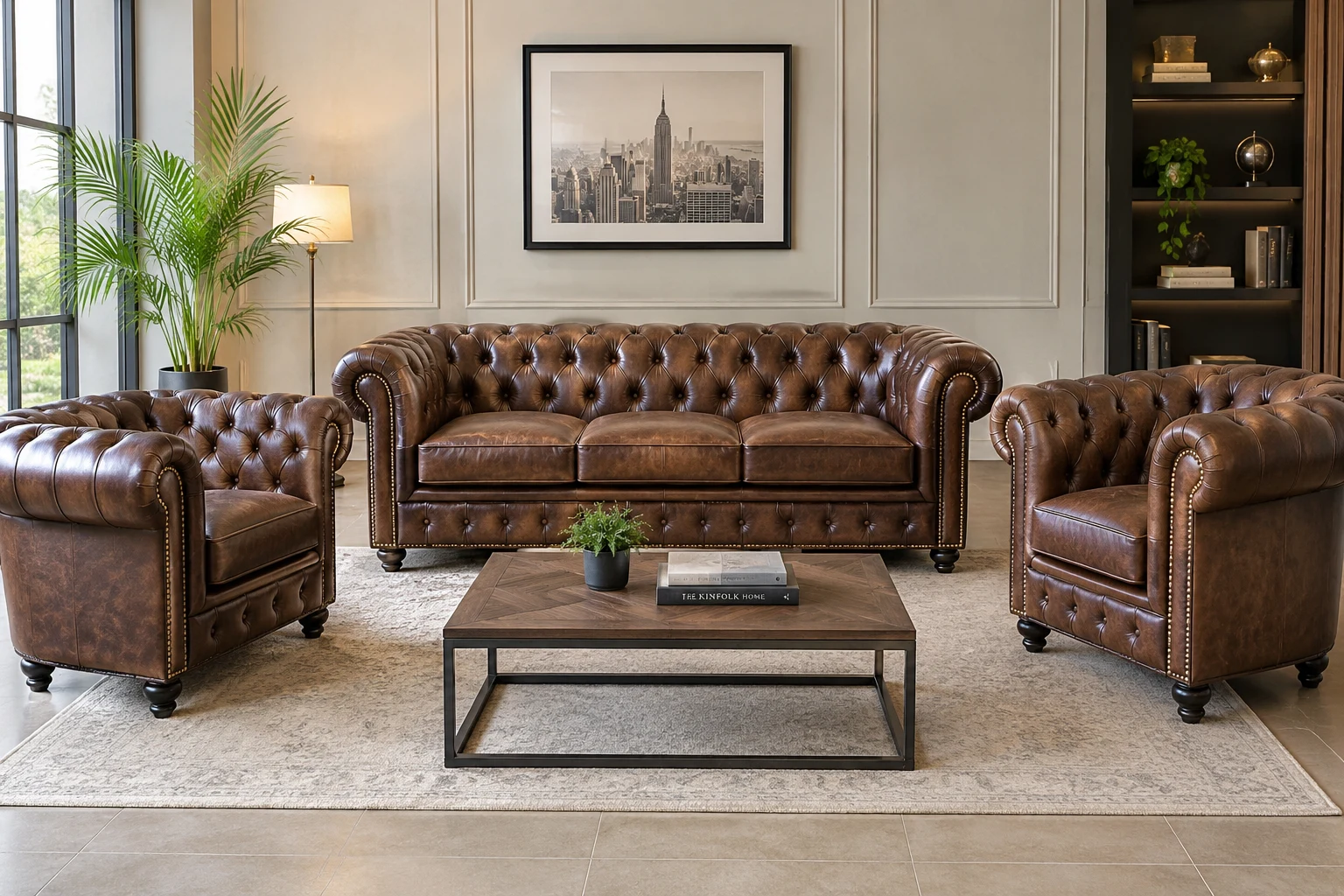
Leather is the traditional material, and full-grain or top-grain leather is what gives a Chesterfield its characteristic patina as it ages — the set pictured above is a classic brown leather execution. Leather is also easier to wipe down, which matters in hospitality settings. Fabric Chesterfields (often velvet or a performance weave) are increasingly common where a softer, more residential look is wanted, or where budget favors fabric over leather at scale.
Quick comparison
| Factor | Leather | Fabric |
|---|---|---|
| Durability | Very high; improves with age (patina) | Depends on weave and rub count |
| Cleaning | Wipe-clean, resists spills | Needs fabric protection or professional cleaning |
| Typical setting | Lobbies, lounges, executive offices | Living rooms, boutique hospitality |
| Cost | Higher per unit | Generally lower, more finish options |
What a Chesterfield Set Usually Includes
A matching Chesterfield set typically pairs a 2- or 3-seat sofa with one or two armchairs built on the same frame and tufting pattern, as in the set pictured above — useful for furnishing a lobby seating area or a living room where pieces need to visually match rather than being bought one at a time.
What to Check Before Buying a Chesterfield for a Commercial Space
- Frame construction — a hardwood or reinforced frame holds tufting and button placement far longer than engineered wood under daily use.
- Foam/cushion density — contract-grade foam resists sagging under nightly lobby traffic far better than residential-grade foam.
- Tufting method — hand-tufted buttons sit tighter and more evenly over time than machine-pressed tufting.
- Leather grade — top-grain or full-grain leather wears in, not out; bonded or split leather degrades faster under commercial use.
Where Chesterfields Work Best
Hotel lobbies, executive lounges, boutique reception areas, libraries, and living rooms all suit the style — anywhere a space benefits from a seating piece that reads as established rather than trend-driven. The classic brown leather finish shown above is a versatile starting point, pairing easily with both modern and traditional interiors.
Final Thoughts
A well-built Chesterfield is one of the few sofa styles that looks more at home the longer it's used. Berfa Group Turkey manufactures Chesterfield sofa sets in both leather and fabric, built to contract-grade specification for hospitality projects as well as residential orders. Get in touch with our team for finishes, dimensions, and lead times.
Frequently Asked Questions
Straight answers to the questions global buyers ask us most about this topic.
What makes a sofa a Chesterfield?
A true Chesterfield combines deep button-tufted upholstery, rolled arms level with the backrest, and a low straight base — all three features together, not just one.
Is a Chesterfield sofa always leather?
No — leather is the traditional and most common material, but fabric Chesterfields (velvet or performance weaves) are widely made today, especially where a softer look or lower cost is preferred.
Are Chesterfield sofas good for hotels and commercial use?
Yes, when built to contract-grade specification — a reinforced frame, higher-density foam, and genuine top-grain leather or a high-rub-count fabric hold up well under daily lobby or lounge traffic.
What's included in a Chesterfield sofa set?
A typical set pairs a 2- or 3-seat Chesterfield sofa with one or two matching armchairs built on the same frame and tufting pattern, so the pieces match as a group rather than being sourced separately.
Written by the Berfa Group Editorial Team
Our export, product, and manufacturing specialists have supplied furniture, mattresses, and FF&E for hospitality and commercial projects worldwide since 2008 from our Kayseri, Turkey factory.
Last updated October 2, 2026